A place for my thoughts on design, art, & architecture.
On Design
At its heart, design is the expression of purpose. Purpose implies a need and a need implies a problem that someone would like to solve.
The modern idea of the act of designing sprung from this scenario. Though I accept this, I think there is another less rational element that one should consider. It relies on intuition more than pragmatism. A well designed chair, for example, will give you the feeling you’ve known it before but you’ve since forgotten it. It feels right and you’re not sure why at first. There’s a natural rhythm to it. It’s simple and irrefutable. And you think to yourself “Of course! Why didn’t I think of that?”
I think of it similarly to recognizing when words are transformed into a poem. Or when an image becomes art. There’s no line to distinguish it.
Inside the museums
Infinity goes up on trial
Voices echo this is what
Salvation must be like after a while
But Mona Lisa musta had the highway blues
You can tell by the way she smiles
-Visions of Johanna, Bob Dylan
Contradictory Ideas
Early in Frank Gehry’s career as an architect he worked for two men who exemplified seemingly opposing philosophies. One architect was pragmatic in providing a service to clients and, Gehry felt, lacked conviction and belief in his work. The other architect was dogmatic in his creation of forms and the only barrier was in convincing a client to accept his proposal.
Gehry thought there was room for both: solving client problems pragmatically and creating new and interesting forms which surprise and engage. The two ideas appear at first to be contradictory, but they can be achieved simultaneously. Design defers to the constraints of a given problem, and balancing them while you shape a solution is difficult to accomplish, but it must be done.
I believe the best sign of intelligence is the ability to hold two opposing ideas in your head at the same time without rejecting one.
In the dime stores and bus stations
People talk of situations
Read books, repeat quotations
Draw conclusions on the wall
Some speak of the future
My love she speaks softly
She knows there’s no success like failure
And that failure’s no success at all
-Love Minus Zero/No Limit, Bob Dylan
Lighting As a Catalyst
How lighting design can guide space and experience
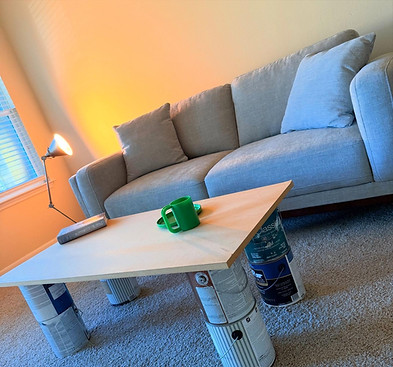
An often overlooked element of the built environment is one that is difficult to understand until we experience a space in person: light. Lighting quietly shapes the way we perceive and experience an environment. Yet it is frequently treated as the final layer added once the architecture, furniture, and finishes have been accounted for.
An interesting thought experiment is to reverse this process: to design a space beginning with lighting and only afterward introduce walls, furniture, and fixtures. How might this change the way a space is conceived? Instead of asking how light can accentuate architecture, we might ask how architecture can be used to support or frame light.
Lighting deserves a seat at the table the moment a design concept begins to form. An art gallery, for example, can exist as four walls with framed works hung neatly along them. But it is lighting that transforms those walls into an experience. With well designed lighting, the same room can feel intimate or monumental, formal or informal, contemplative or energetic. Light gives hierarchy to space, subtly informing the viewer what matters and what does not.
One of my professors in design school described the complexity of lighting design in the simplest of terms: “Figure out what’s important and light that.” Though concise, it gets to the heart of architectural lighting. Not every surface needs equal visibility. Some elements are meant to command attention (a textured wall, a piece of art, or an architectural detail, for example), while others are meant to recede, existing primarily to fulfill architecture’s most basic role: enclosure and shelter. By selectively revealing and concealing, designers can guide focus and choreograph a space as it is experienced, unfolding over time rather than all at once.
The ability to direct attention is powerful. Lighting allows designers to shape emotion and behavior without altering physical mass or ornamentation.
I noticed this recently in my own apartment. When I first moved in, I placed a large desk lamp in the living area temporarily, before any furniture had been delivered. By aiming the lamp toward the wall to create ambient lighting rather than task lighting, the room took on a warm, layered glow that added depth, softness, and a sense of drama. When my sofa arrived the next day, I chose its placement based on where my lamp illuminated the wall best. In this case, lighting determined where the furniture belonged and how the space would function.
Now, the space feels more intentional and more alive in contrast to the overhead fluorescent lighting, which evenly covers the room but lacks nuance. This small moment reinforced an idea I continue to return to as a designer: light can act as a catalyst for design.